Introduction
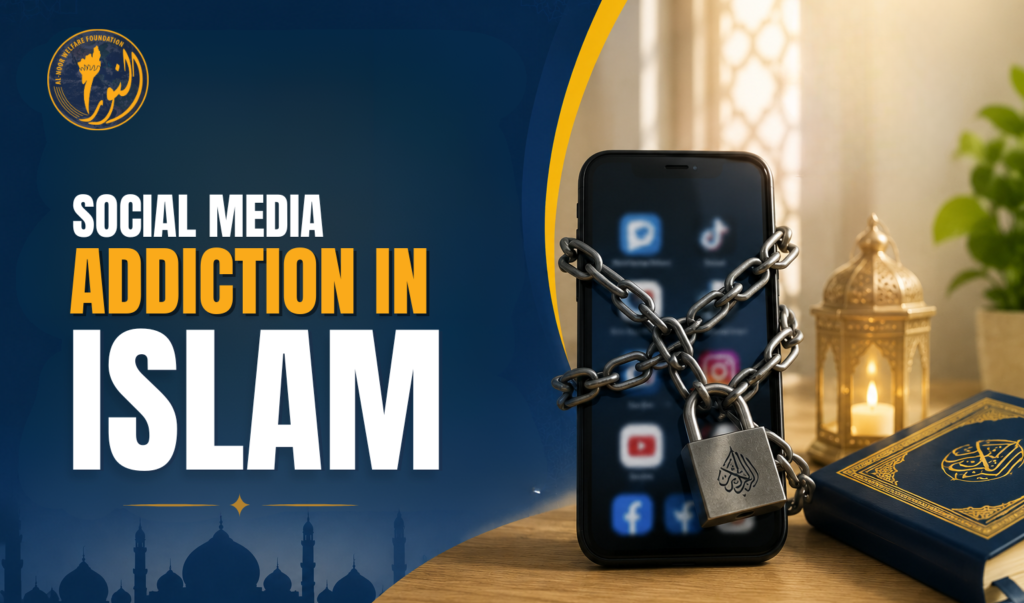
Social media addiction in Islam has become a serious challenge for many Muslims, especially students and young people. Platforms like TikTok, Instagram, YouTube, and Facebook consume hours of time daily and can negatively affect faith, productivity, mental health, and relationships. Islam teaches Muslims to use time wisely and avoid anything that leads to distraction or harmful behavior.
Social Media Addiction in Islam and the Importance of Time
Islam considers time one of the greatest blessings from Allah. A Muslim will be questioned about how life and time were spent.
The Prophet Muhammad ﷺ said:
“A person’s feet will not move on the Day of Judgment until he is asked about his life and how he spent it.”
(Tirmidhi) – Sunnah
Spending endless hours scrolling social media can slowly waste valuable time that could be used for:
- Salah
- Quran recitation
- studies
- family
- self-improvement
Harmful Effects of Social Media Addiction in Islam
Excessive social media use can affect both deen and daily life.
Common harmful effects:
- Weak connection with Allah
- Delayed or missed Salah
- Lack of focus in studies
- Anxiety and stress
- Comparison with others
- Wasting time online
- Exposure to inappropriate content
Islam encourages balance and self-control in all areas of life.
How to Avoid Social Media Addiction in Islam
Muslims should use technology responsibly instead of becoming controlled by it.
Practical Islamic tips:
- Limit screen time daily
- Avoid unnecessary scrolling
- Follow beneficial Islamic content
- Turn off distracting notifications
- Keep phones away during Salah and study time
- Replace screen time with Quran or productive activities
Small changes can create a healthier lifestyle.
Importance of Self-Control in Islam
Islam teaches discipline and self-control. A strong Muslim learns to control desires and habits instead of becoming addicted to them.
Allah says in the Quran:
“Successful indeed are those who purify themselves.”
(Surah Ash-Shams 91:9) – Quran
Developing self-discipline helps Muslims protect both their mental health and spirituality.
Using Social Media in a Positive Way
Social media itself is not completely harmful. It can also be used for:
- Islamic learning
- spreading beneficial knowledge
- staying connected with family
- educational content
- dawah and motivation
The key is moderation and responsible usage.
How Muslim Students Can Balance Social Media and Studies
Students are among the most affected by social media addiction.
Helpful habits for students:
- Study before using social media
- Use apps that limit screen time
- Create a daily schedule
- Spend more time on productive activities
- Take regular breaks from devices
Balancing studies, deen, and digital life is important for success.
Conclusion
Understanding social media addiction in Islam helps Muslims protect their time, faith, and mental well-being. Islam encourages balance, discipline, and beneficial use of technology.
By reducing unnecessary screen time and focusing on productive habits, Muslims can strengthen their relationship with Allah and live a more meaningful life.
You may also like: How to Balance Deen and Studies for Muslim Students